Angola: A Precious Jewel of Africa
Angola: A Precious Jewel of Africa
Angola is a country located in south west of Africa. It is the 7th largest country on the continent boarded by Namibia to the south, Republic of Congo to the north, Zambia to the east, and the Atlantic Ocean to the west. It was a former Portuguese colony from 1484 until the decolonization in November 1975.
Angola is still recovering from 27 years of the civil war that plagued the country from its independence in 1975 to 2002. The Capital and the largest city of Angola is Luanda. Portuguese is the official language, spoken by 80% of the population as the primary or secondary language. Kikongo, Umbundu and Kimbundu are the most popular indigenous languages of the country. Their official currency is Kwanza, the exchange of which is $1 to 450 Kwanzas but could get anywhere from 600 to 650 if exchanged on the black market.
TOTAL POPULATION
30M+
Spanning diverse tribes and religions.
EXCHANGE RATE
450 Kz
Official rate is 450 Kwanza per $1 USD.
BLACK MARKET RATE
650 Kz
Can fetch up to 600-650 Kwanzas.
NATION STATS
7th Size
Seventh largest country on the continent.
Despite extensive oil and gas resources, diamonds and rich agricultural land, Angola remains poor. The product for which Angola is best known is its oil, which has given it the nickname, “the Kuwait of Africa”. Angola’s economic growth is highly uneven, with most of the nation’s wealth concentrated in a disproportionately small sector of the population.
Angola is a large country with over 30 million people and several different religions, languages and tribes. There are about 1,000 religious communities, most of which are Christian. Roman Catholics constitute about half of the population. The main staples in Angola are rice and funje, a type of polenta made from corn. Along the wide coastal strip, fresh fish and seafood dominate the menus.
Arrival in Luanda & Advent Sunday
Due to waiting for connections in Atlanta and Amsterdam, a 20 hour flight became 45 hours before we arrived in Luanda, the Capital city of Angola. I spent two weeks in Angola in the first half of December travelling through different cities and remote villages where the La Salette missionaries serve God’s people. I was always accompanied by our missionaries, especially Fr. Pedro Chingandu in the Luanda area, Fr. Avelino Sangameya, the Provicial Vicar in Huambo, Camella, Ndunde, Cubal and Malongo missions and Fr. Celestino Muhatili, the Provincial Superior in Hanha and Benguela missions.
The former Provincial Superior, Fr. Pedro Chingandu was at the airport to pick me up. Although traveling in Angola is not that dangerous, it is always recommended to have someone to accompany you especially if you are traveling after dark and alone. He drove me around to show the city for a couple of hours before reaching the house where I would stay for the next few days. This is a house in a gated community where Fr. Pedro and two other La Salette priests reside. This property has been developed by a friend of him and the La Salette fathers, which includes a beautiful chapel named after La Salette, a medical Clinic, and a cluster of homes, which houses lay people, a convent for sisters and a house for the La Salette community.
I arrived in Luanda on the Saturday before the Advent season began. I was asked if I would preach on the first Sunday of Advent which I gladly accepted without even thinking that they didn’t speak English but spoke Portuguese. It was quite an experience to concelebrate and preach at my first Mass ever in Angola. Although this is not a parish entrusted to the La Salette missionaries, Fr. Pedro and other La Salette priests take turns to offer Mass whenever the pastor needs help.
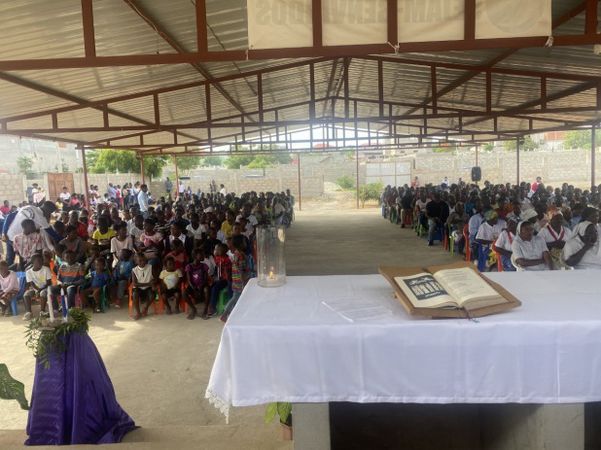
The church has a covered roof which stands on four pillars. The sacristy was simply at the back of the Church in the open air where the priests vested and started the procession before the Mass as the congregation sang the entrance hymn. There were hundreds and hundreds of people in attendance. Some people brought their own chairs, others sat on rocks or in the shade of the trees. People spent hours in the scorching heat as it was summer and the temperature climbed up to 100 degrees.
I was amazed at their participation in the singing and dancing and sharing in the joy of the celebration. The people were so gracious in welcoming me in their midst and preaching on the first Sunday of Advent was a blessing that helped me realize how keen and attentive the people were in listening to the Word of God. There is also a large parish served by the missionaries of La Salette just outside of Luanda, in the city of Viana. Although construction of this church building started years ago, it has been slowed down due to lack of funds. One of the two priests serving this community also sees to the spiritual needs of an adjacent mission. The bishop is in the process of making this mission into a full- fledged parish and entrusting the responsibility to the La Salette missionaries.
Angola Mission Chronicles
Chronicles of the rich missionary work and community building across S. Tarcisio, Cubal Swiss legacies, Malongo farming, and Hanha formations.
Huambo Mission: History & Golden Witness
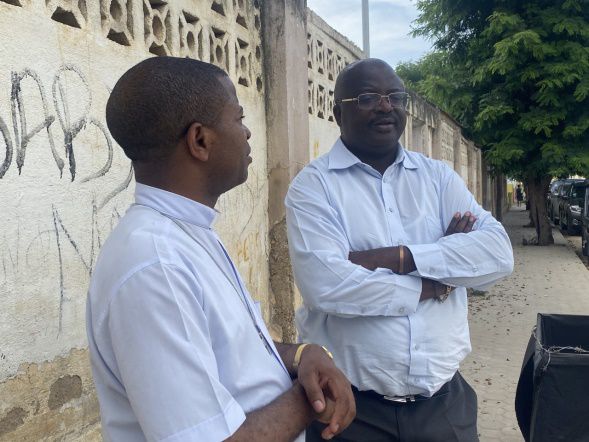
The Missionaries of Our Lady of La Salette arrived in Angola in 1946. Their presence in Archdiocese of Huambo had been motivated by the need of the local Diocese as well as the interest of the Congregation. The Missionaries of La Salette felt the need to recruit the Angolan candidates for the priesthood, taking into consideration the challenges of their ministry (evangelization) as well as their presence in the future. Thus the La Salette established a Formation House, La Salette Major Seminary of Philosophy and Theology in 1978, at S. Joao Quarter in Huambo. Rev. Fr. Leander Volken, MS, was the principal person in the Arch diocese by the time. From 1978 till July 1999, each and every La Salette priest received their formation here, especially Philosophy and Theology.
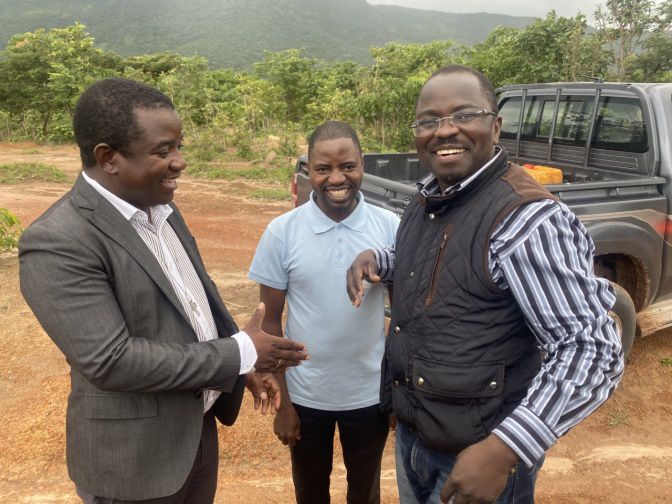
Fr. Avelino Sangameya, the Vicar Provincial for the Province says, “I personally did Philosophy over here. I was the last formator in Huambo. From 1999 up to this day, all the Formation Houses except the Novitiate (which is in the Archdiocese of Lubango) are located in the Diocese of Benguela. Due to the civil war, we were forced to shift from Huambo to Benguela.”
Fr. Avelino continues with the history of Huambo mission, “Back to Huambo, in 1990 His Grace Francisco Viti, in his capacity as Archbishop of Huambo entrusted two small Christian Communities under the care of La Salette Missionaries: S. Tarcisio and Kambiote. We are serving these Communities at present. At S. Tarcisio there is a small heath center and a primary and an elementary School. Both structures have been built by La Salette Missionaries in the early 1990’s in order to address the needs of the parishioners, the great majority living under the line of poverty.
Huambo was the capital city in colonial times and today is the second most important city after Luanda, the capital city. Due to its strategic localization, Huambo had been disputed between the Government and the rebels during the civil war (1975-2002). In that situation, it was not easy to be a missionary. A Missionary was everything to the people: sometimes one could act as a doctor, a nurse, an NGO, a teacher, a Pastor, etc. Many missionaries shed their blood for the sake of their faith. To make things worse, after independence, the ruling party adopted Communism as the ideology of Angola. One could be blamed and threatened to death as an enemy by either by Government or rebels. But there have also been cases in which a few missionary priests and nuns, catechists and other lay people who have been assassinated just because they were Christians. I have to admit, says Fr. Avelino “the La Salette missionaries gave wonderful witness to their faith. I am a La Salette priest today (for 21 years now) due to their witness. They are my inspiration every day. Honor must be given for their bravery! Thank God, since April 2002, Angola is on the road to peace and reconciliation.
In S. Tarcisio and Kambiote there are two Priests serving about seven thousand parishioners. There were three priests and the third one died in December 2019. Main activities are: instructions for sacraments, catechesis, education, especially for the youth and women are instructed on how to deal with managing their homes, counselling and teaching, etc. They also focus on formal education for poor students at school. Actually, the missionary school at S. Tarcisio was meant to help the children from poor families. In fact, 90% of our parishioners are very poor. They live with less than one US Dollar a day. Some are working on the piece of land they own. They can grow corn, cassava and vegetables…After selling those products, they buy what they can afford. It’s a real struggle for life. This is one of the reasons why the majority of families are unable to pay the school fees for their children. Unfortunately, the school cannot accommodate all. Just to give an example, this school year (2019) there were over three thousand students. But the school could accommodate only two thousand students. If they do not accept those children there is a great risk for them to turn to crime, drug trafficking and/or prostitution.
In order to address this threat, our missionaries have embarked on a project to transform an old building into a secondary school building. Only God knows where the help would come from.
Cubal Mission: Swiss Foundations & Partnership
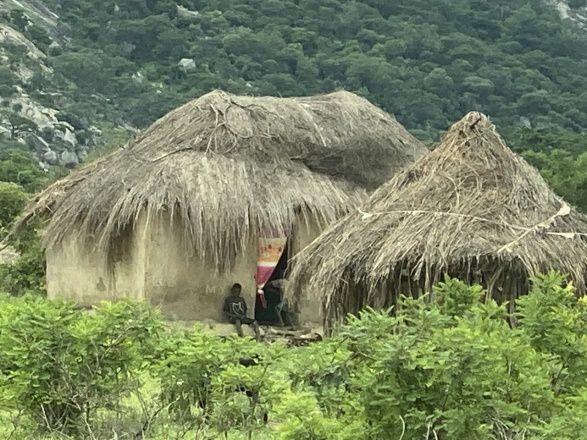
There are four La Salette priests assigned to the Cubal mission. It was started by the Swiss missionaries with Fr. Tony Truffer as the founder who never abandoned the people during the civil war. It is a church that can seat 1000 people. There are 28 mission stations. Some of them are hundreds of miles away from the center.
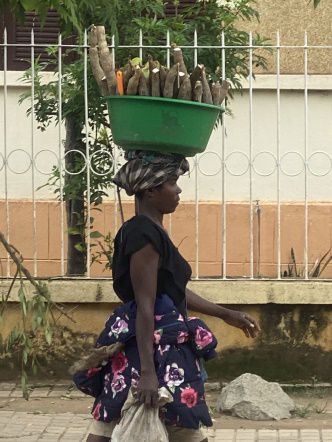
There is a primary and secondary school. There is a convent for seven St. Theresa sisters who teach at the school and run a small hospital. There are also four La Salette nuns who help with pastoral needs of the parish. There are at least 2000 baptisms a year. On some special occasions and Sundays when the church cannot accommodate all the people, mass is celebrated outside in the open air. Though poor, people collaborate and support the church in any way possible. The Government claims the Church as partners. The government pays the salaries of the teachers in the schools whether Catholic or private. They also pay the nuns who are employed in the hospitals and clinics. All that the Government expects in return is less teaching of the catholic faith and principles but to mold the children into responsible human beings and citizens with high morals.
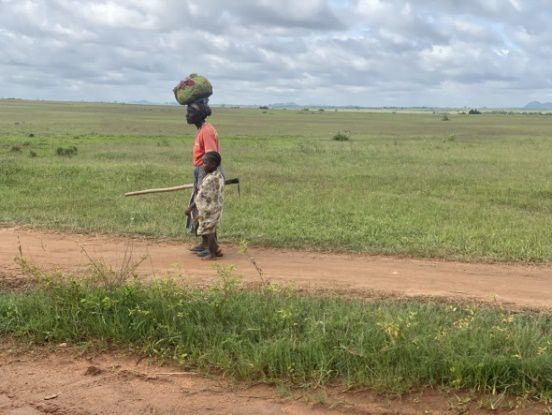
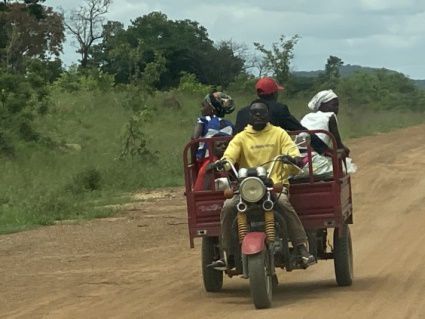
Their major challenge is the lack of transportation facilities. Due to poverty, people look for easy money and end up in drugs and gangs. There are many refugees that remained after the civil war, which creates unemployment and strain on finances. They hope to establish a social center where they can teach and train parishioners especially women in various skills, thus making them bread-winners for the family.
Malongo Mission: Sustenance & Shifts
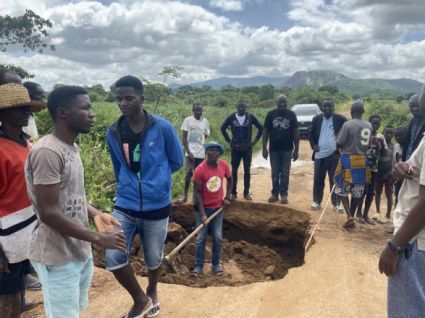
We left for Malongo the next morning which is about 50 miles from Cubal. The mission Nativity of our Lady was established by the Swiss missionaries in 1964. There are 18 mission stations, the farthest is about 60 miles away from Malongo. They have a primary and secondary school with 800 students.
How would you teach 800 students with only 4 class rooms? They come in shifts with more than 50 students in one classroom. St. Catherine of Sienna sisters manages two hostels for boys and girls with 65 students. They are struggling with lack of accommodations and food for the boys and girls on a daily basis. The priests themselves work on the farm to produce crops that will put some food on the table.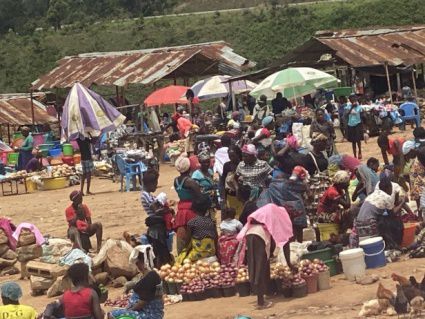
Lack of transportation was a common problem. They have one vehicle and it serves as an ambulance when there is sick call from the parishioners in the middle of the night.
Hanha Mission, Benguela Seminaries, & Lubango Shrine
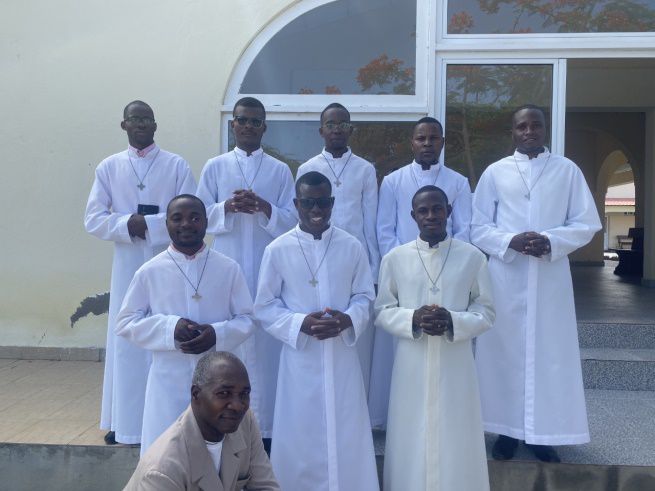
The next day, The Provincial Superior volunteered to drive me to the next mission since Fr. Avelino had to return to school to teach the next day. So we drove to the catholic mission in Hanha in Kambondongolo 30 miles from Cubal. Currently, there are 5 La Salette missionaries that serve in this mission. This is a mission founded by the Swiss La Salette missionaries in 1954. There are 28 remote missions and the farthest is about 100 miles away. St. Catherine of Sienna sisters was started here by one of the Swiss La Salette priests. Seven sisters still continue to serve in this place especially in running a hostel for girls. They also assist the priests with any pastoral needs. They told me that they can’t reach some of these missions by car but use motorcycles. There is a primary and secondary school (1-9) with 500 students. They have a soup kitchen that feed the hungry and the poor on Saturdays and on Wednesdays they focus their ministry for the sick and mentally handicaped. Opposed to the Christian beliefs, witchcraft is practiced in the area. The greatest challenge is to maintain the existing structures that are falling apart. They don’t have electricity but depends on generators for power. They need more solar panels to have power at least a few hours at night. They have only one vehicle to start with which limits their travels to interior missions especially during rainy season. In this place, no priests receive a public salary, which makes it difficult even to buy the basics they need. They have to depend on the small donations they receive from their ministry.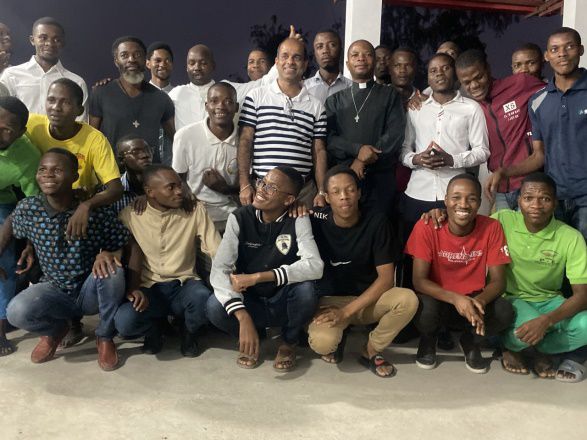
Then we drove the longest stretch from Cubal to Benguela about 10 hours on the road. Though it was a highway, a good part of it was in poor condition. It was already dark when we arrived in Benguela. We made a short visit to our high school seminary but the seminarians had already gone for their summer vacation. There are around 65 high school seminarians studying in two different locations. We briefly spoke with the rector and 2 seminarians and then proceeded to visit the Philosophy seminary. There are 88 philosophy students. They were to welcome us. They all came out to the main gate to the entrance of the seminary and sang a welcome song and led us into the seminary. They were so eager to tour me around and show me the new building. It has a chapel under construction. Spacious classrooms, a dining room and a kitchen are also under construction. They have completed half of the entire building, which has already been occupied with 4 seminarians in one room with bunk beds. The other half is being built. By its completion, they can accommodate 100 seminarians with 2 or 3 in one room. Then they took us to the top and fourth level where they have an open class room for all students. After a short program, I was asked to speak to the students followed by questions. Though their English was limited, they all wanted to say something, curious about the work I do and the various ministries we have in America. I encouraged them to learn a second language, English or Spanish or both so that they will have a broader sense of who we are as La Salettes around the world. The North American Province had given them a gift last year upon their request to build a seminary for the philosophers. They have sent their deepest gratitude for the support the La Salette Province in North America had extended towards fulfilling their dream. Quite late and exhausted we finally proceeded to the Provincial house, where a sumptuous dinner was waiting.
Next morning, we visited their Theology seminary. There are currently 33 theologians. They were preparing to go home for their summer vacation. As it was the custom, they all renewed their vows at the special Mass which the Provincial Superior celebrated that morning. After Communion, Fr. Celestino asked me to say a few words to the theologians which he translated. Their youthfulness, energy and enthusiasm are beyond compare. The problem in Angola is not lack of vocations as in the United States. Vocations are plenty but they don’t have enough facilities to accommodate them.
The La Salette Shrine and the Spirituality Center are located in the Province of Huila/Lubango. They have the Novitiate program on the same property where they have 8 novices at present. God willing there will be 25 novices next year. They have a retirement house where the only Swiss La Salette (Fr. Viktor Andereggen) left in the country has retired together with the oldest Angolan La Salette (Fr. TarcisioTchiheke). I was privileged to concelebrate with Fr. Celestino at the Shrine on Sunday morning. It was very moving as the shrine was filled with hundreds of people with so many staying outside in a plaza. The youth choir was exceptional. The Mass started with a procession around the shrine with music and dance. The Mass lasted three hours. As usual I was asked to share a few words with the congregation.
Benguela Province has a mission that sits on the top of a hill in Katumbela under the title of Santo Antonio mission. Then we took a drive through the port city of Lobito, from where many slaves were exported during the colonial era. I returned to the USA inspired and amazed at seeing the deep faith of Angolan people.