Tanzania, beautiful people, beautiful country
ARCHIVAL CHRONICLE
The Land, Borders & Diverse Peoples
Tanzania is a sovereign state in eastern Africa. The countries that border Tanzania are: Kenya and Uganda to the north; Rwanda, Burundi and the Democratic Republic of Congo to the west; Zambia, Malawi and Mozambique to the south; and the Indian ocean to the east. Mount Kilimanjaro, Africa’s highest mountain is in northeastern Tanzania. The capital city is Dodoma and the largest city is Dar es Salaam. The national language is Swahili and the official language is English. Over 100 different languages are spoken in Tanzania making it the most linguistically diverse country in East Africa. It has a population that is estimated close to 67million, composed of several ethnic, linguistic and religious groups. Predominant religions are Christianity, Islam, Hinduism and traditional beliefs. Tanzania is mountainous and densely forested in the northeast where Kilimanjaro is located.
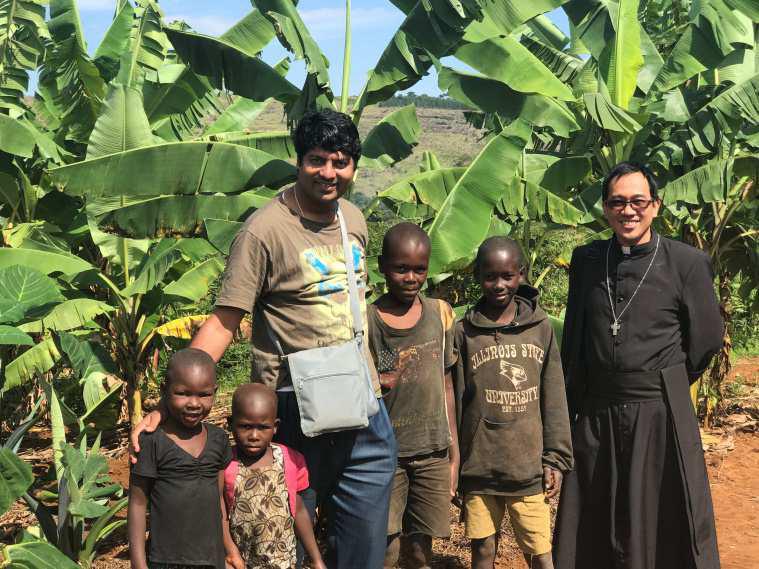
Approximately 68% of Tanzania’s 67 million people live below the poverty line. The Tanzanian economy is heavily based on agriculture and farming. The large food crops in Tanzania are corn, cassava, sweet potatoes, beans, bananas, rice and sugar. The large cash crops are cotton, cashew nuts, tobacco, coffee and tea. Only 20 % of Tanzanians have access to electricity and less have access to clean water. Almost 70% of the poor population live in rural areas involved in farming. Lack of agricultural technology, droughts and floods severely endanger the living standards of most of the population and create huge increases in unemployment, hunger, malnutrition, starvation and various diseases.
North to South Borders
Kenya, Uganda, Rwanda, Burundi, DRC, Zambia, Malawi, & Mozambique
Mount Kilimanjaro
Africa's highest mountain rises majestically in the densely forested northeast.
TOTAL POPULATION
67M
Estimated state count
BELOW POVERTY LINE
68%
Dependent on agriculture
ELECTRICITY ACCESS
20%
In rural farming centers
LINGUISTIC GROUPS
100+
Linguistically diverse
STREETS, CONVERSATION & SPARKLING SPIRITS
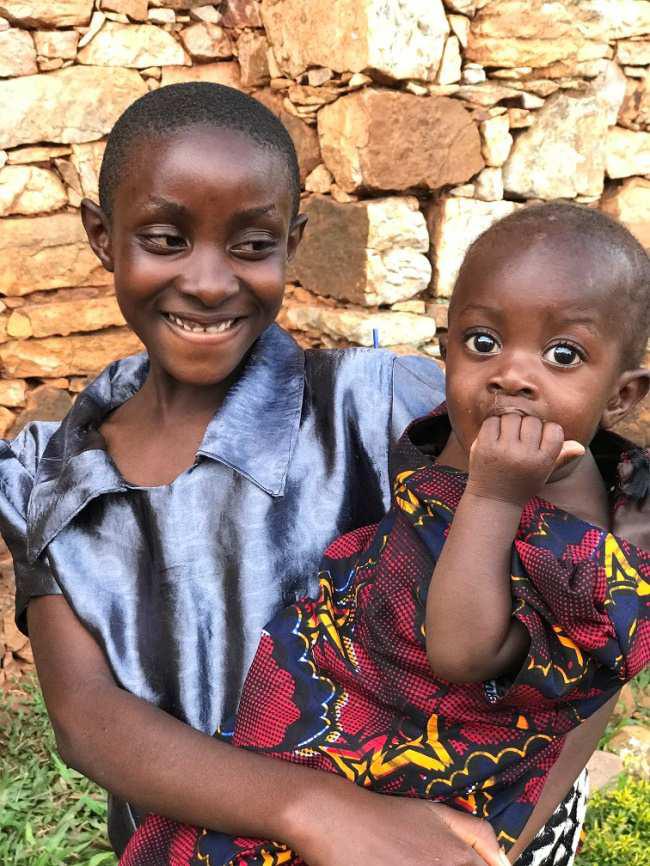
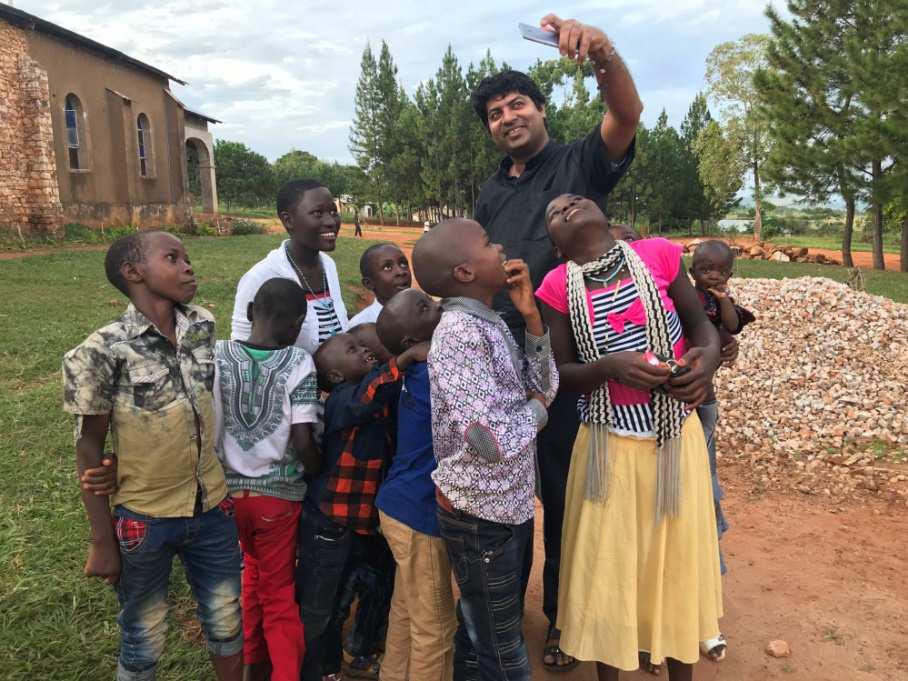
Tanzania is an incredible place by the equator, where the sun will hit you like an open flame. I was lucky I chose to go in the best time of the year in February when the weather was mild. It is a place where the streets come to life-young men walking with trays of peanuts and candy, cars beeping their horns and weaving through the traffic. It’s a place where you can smell the goat being barbecued. Order a portion if you dare – that steak will never taste the same again. It is a place where you see kids run wild in the dirt with muddy knees and shining smiles. It is a place where the women dress wrapped in the brightest fabrics, tailored perfectly to their curves. They have some of the whitest and brightest smiles in the world.
It is a place where Swahili is the tongue of the streets. It’s a beautiful language. It is a place where the kids are full of laughter and smiles. Life is not rosey but sparkles in their eyes will tell you different. Kids are full of love and spirit. They are taught to respect their families and communities and respect their elders. It is a place where the food is hearty and simple. It is a place where people greet one another by saying “Cristu.” In response they will say “ituminiletu” which means Christ is our hope. They don’t stop here but follow with a series of questions and answers as part of their greeting and conversation. They always say “asante”- thank you to show how grateful they are.
“Cristu” — “ituminiletu” (Christ is our hope). Followed always by a warm sequence of inquiries and genuine gratitude.
Establishment of the First Mission
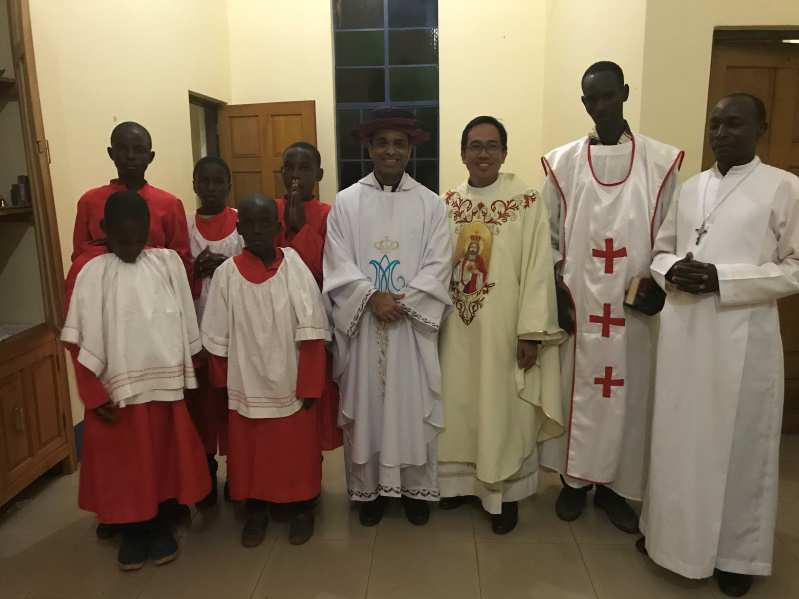
The first La Salette mission in Tanzania was established in July 16, 2016, with the arrival of the first 3 missionaries of Our Lady of La Salette, Fr. Manuel dela Cruz, MS, Fr. Dileesh Porianvelil, MS and Fr. Aldrin H. Cenizal, MS. They were accompanied by the Superior General Fr. Silvano Marisa, MS, Vicar General Fr. Adilson Schio, MS and Fr. Rosanno Soriano, MS, Superior of the Philippine Province.
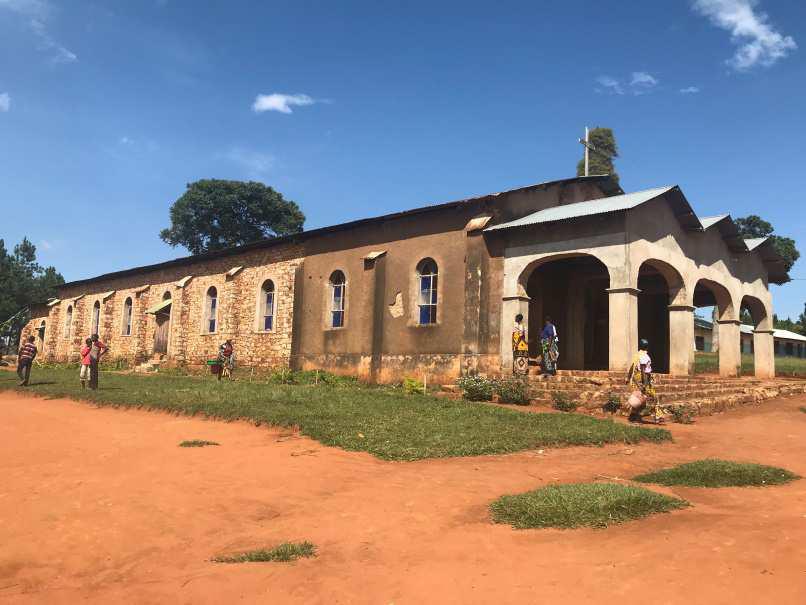
The Our Lady of La Salette Parish- Rutete (parish-designate) is in Bukoba Catholic Diocese in the Kagera Region of Tanzania. The parish center is situated in the village of Rutete, Bukoba Rural with two outer stations (Kahyoro and Rwizi). The parish is composed of less than 1000 Catholic families or around 5000 Catholics from 15 villages. The parish is pre-dominantly Catholic with other Christian denominations and Islamics composing the other members of the community.
The population is mainly dependent on agriculture and livestock farming as a source of income. They grow bananas, coffee, root crops, ground nuts, beans, and vegetables to sell. At the parish they raise pigs, chickens, rabbits, ducks, goats and cows almost all of which were donated by the parishioners.
For the first year the parishioners fetched water from far away to supply water for the missionaries until they were able to make a bore well on the property. The missionaries felt so humbled and connected to them by this service and ever so grateful. They grow bananas, tapioca, coffee, mangoes, beans of all kinds and various vegetables for their own consumption. What they plant and harvest for the basics of their daily life is enough for their needs. One big difference I observed from other mission countries like Haiti, is that the people here don’t starve as much.
15
Villages Served
~5,000
Catholics
No Starving
Compared to Haiti
Holy Week Chronology
A private chronicle of Rev. Thomas's historic stay from April 3rd through April 12th, 2018, accompanying missionaries across Bukoba's highland stations.
Holy Thursday in Rwizi Chapel
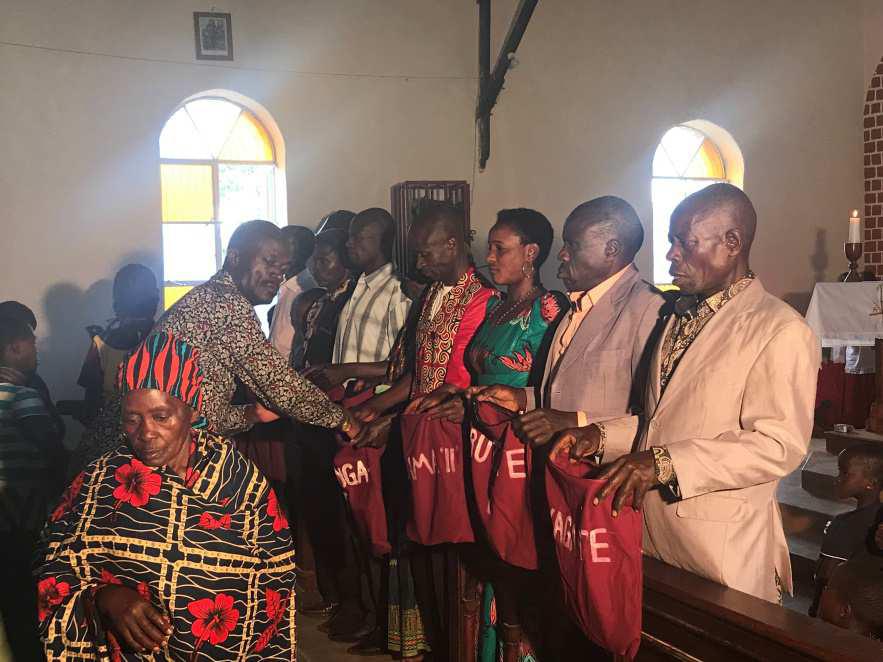
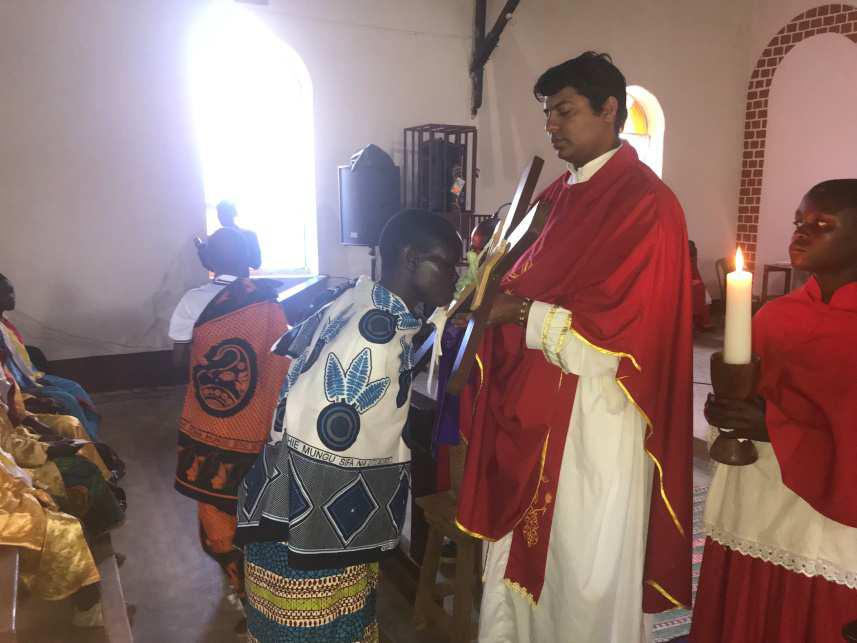
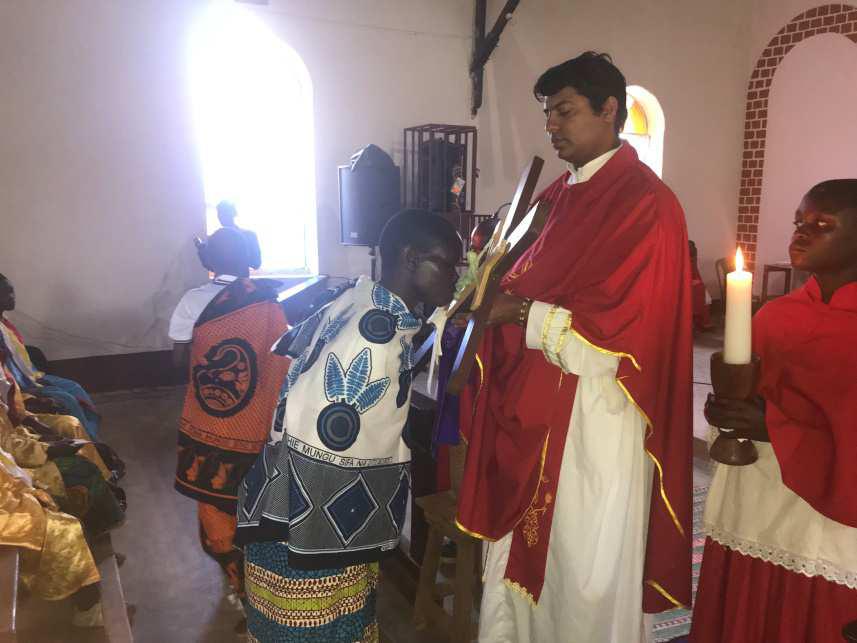
I was privileged to visit Tanzania from April 3rd through the 12th of 2018. It was a blessing to spend Holy Week with them and the people they serve. I was invited to accompany Fr. Dileesh for the service on Holy Thursday in Rwizi mission chapel which consists of two villages. They were just a handful when we started. People kept coming throughout the service. Finally there was no more room in the small chapel made out of mud walls that seemed to be on the brink of collapsing. They sit on a mud floor with hay spread on it. They always choose 12 men for the washing of the feet. Their collection was about $10. After communion I was introduced and welcomed to the community.
I had brought hundreds of rosaries which I distributed especially to the 12 men they chose to wash feet. It’s a great practice that people wear the rosaries around their necks. People participate in liturgies with great devotion and zeal. After communion, people representing each community and village, stood up to offer gifts for me, their guest. There were sugarcanes, bottles of honey, peanuts and eggs. Included in the many gifts was a live chicken. They were extremely happy to receive me with open arms and gave gifts generously from what they have.
I was more than touched by their warm hospitality and welcome. Not a single person missed saying “karibu” which means “welcome”.
Good Friday Station of Cross
Anointing the Sick & Kahyoro Vigil
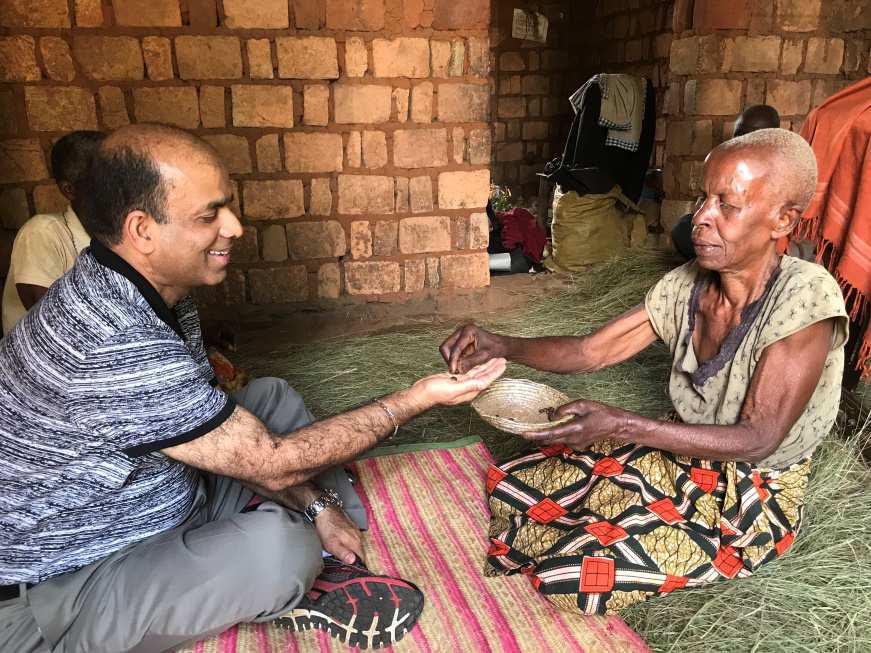
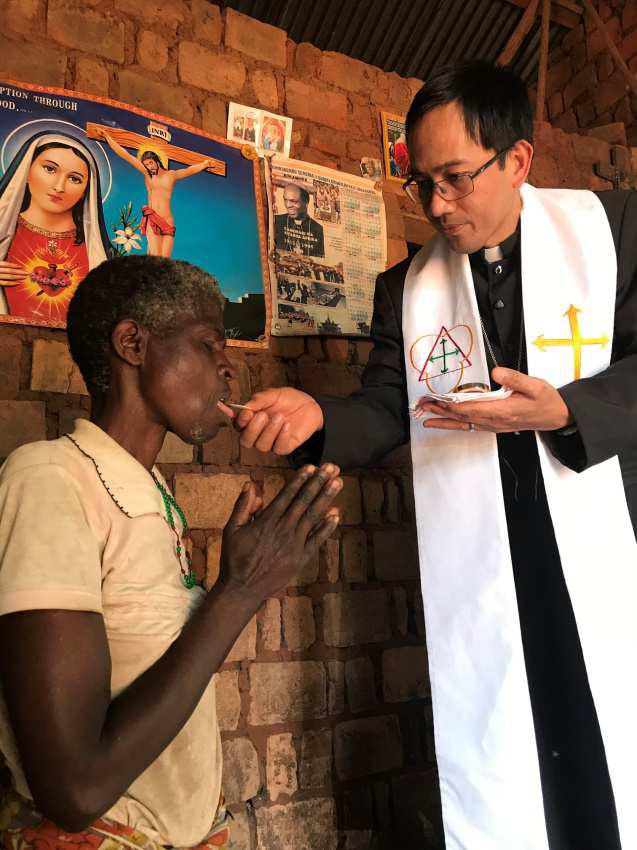
After breakfast we visited a few sick people in their homes. It took us through rough roads with rocks and mud holes and sometimes thick grass to the point of not recognizing where the road was leading us. More than anointing of the sick they prefer to receive communion as often as they can. Upon arrival in a home they will bring out a mat to lay on the floor in the living room where they receive you. You are out of luck if you are looking for chairs to sit on. The whole family wants you to pray together for God’s healing for their sick. In one home the sick person offered me coffee beans as a sign of warm welcome.
Our missionaries do this on a regular basis as they drive to each village and spend the whole day visiting sometimes as many as 15 to 20 sick people. There are times they have to leave the vehicle or the motor cycle on the road and walk miles and miles to their homes due to bad road conditions. I said to myself what a beautiful ministry these missionaries do for the people and nothing stops them from doing it even in the midst of challenges and difficulties. They found a true home far away from their home countries. The difference is that they do this with great joy with no hesitation to smell like the sheep in doing so.
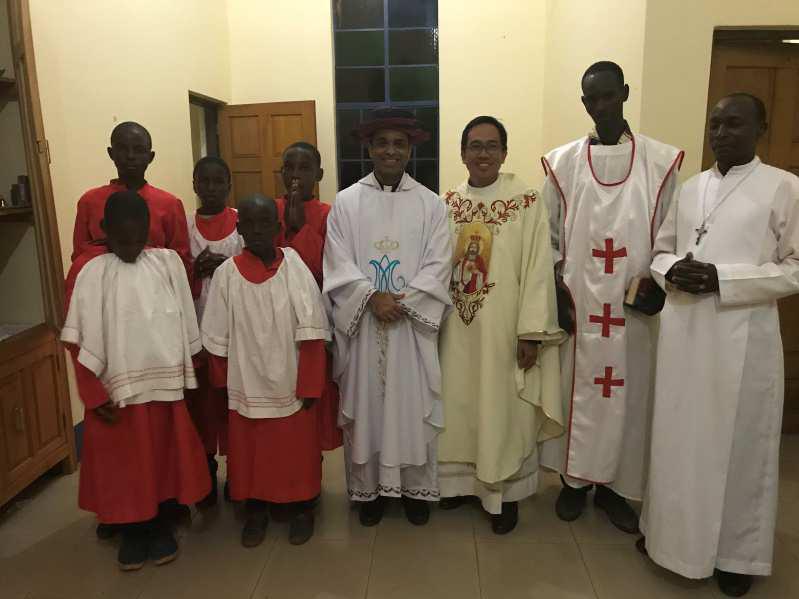
For the Holy Vigil, I joined Fr. Aldrin at their second mission in Kahyoro, which consists of three villages. The church was overflowing with people who walked miles in the evening to come to the top of the hill where the church is located. I was amazed at the active participation of each one and the joy of being together in the church for the solemn celebration.
Three-Hour Easter Celebration
Easter Sunday Mass was 3 hours. The choir joined the priests just outside the sacristy in a procession with singing and dancing, clapping hands and howling. The whole church sang with them until we reached the sanctuary to start the mass.
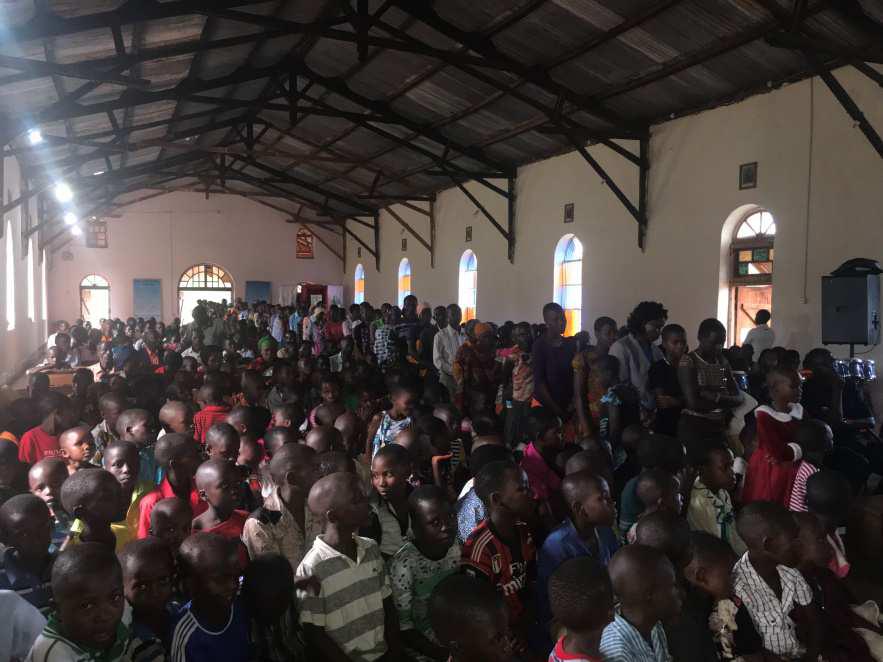
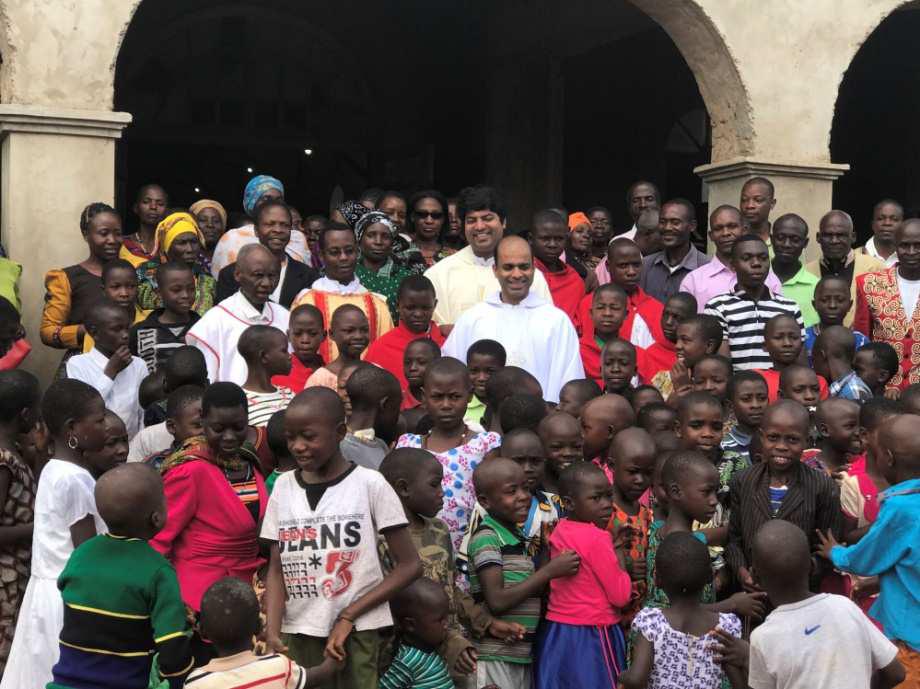
Around 200 children sat around the altar and quite actively participated in the prayers and singing.
Standing Room Only & Preaching
On Easter Monday they had a full church with standing room only. The deacon Revocatus Mwemezi is assigned to our parish for his deaconate ministry and preached a homily that lasted for at least 20 minutes.
It was never boring for people as he engaged them throughout the homily and used this moment to teach and catechize them.
Witnessing a Village Funeral Support
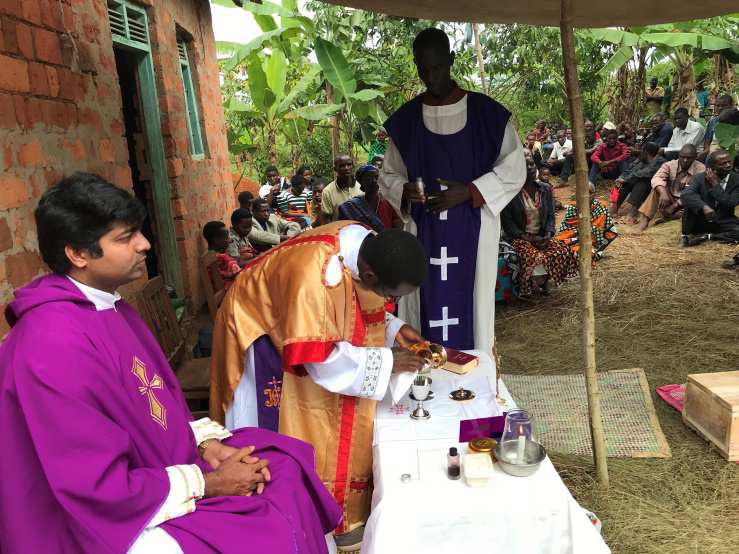
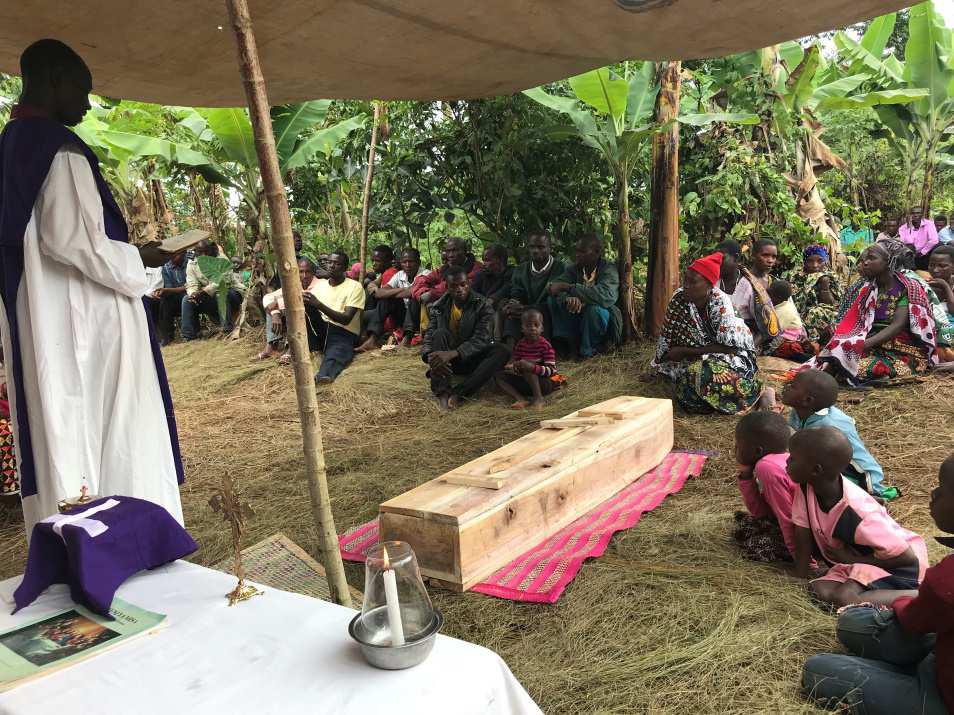
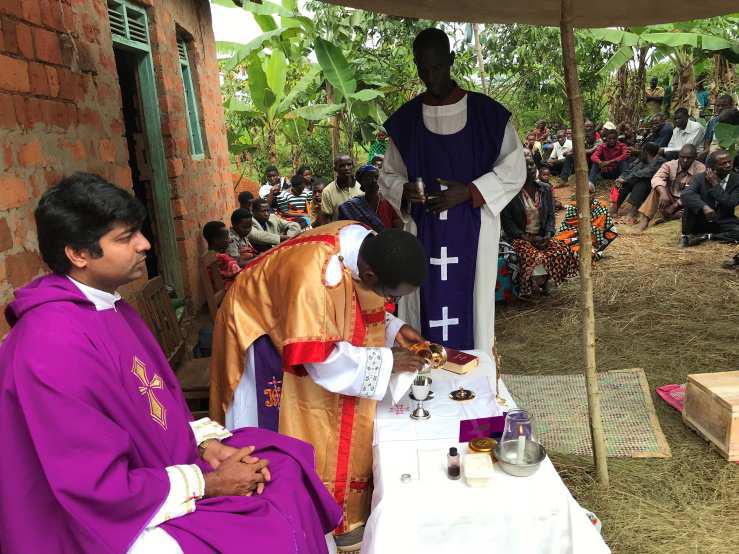
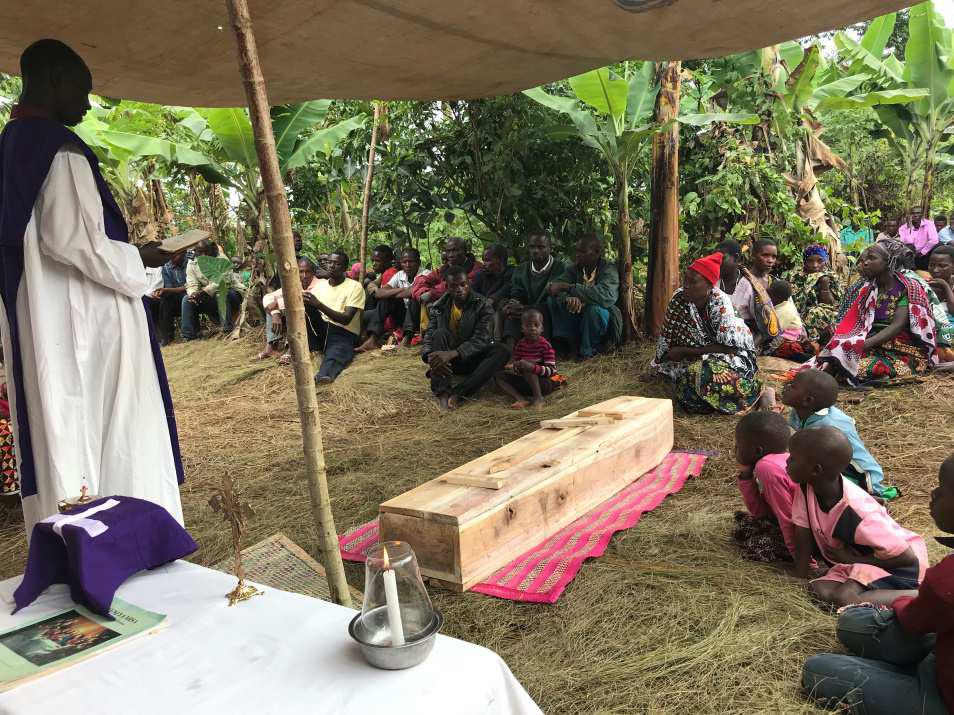
Funeral: Witnessing a funeral service was quite a unique experience. The dead body was placed in a tent just outside right in front of the house. Before that the body is kept inside the house. A group of people came from outside beating on their chests, mourning and crying over the dead. The priest says the introductory prayers together with the family inside the house and then they bring out the body to place it in the tent in front to begin the Mass. They take up two collections one for the church and the second one for the priest to celebrate masses for the dead.
There would be at least 10 people that would stand in front of the altar holding the collection bags where the people will bring up their contribution and place it in one of the bags while the choir kept singing. When offering their contributions they would offer them with both hands which is a sign that they offer them wholeheartedly to God.
At the end of the Mass they take the body to bury it in their own backyard as burying the dead in the cemetery is rare. Everyone stays until the entire service is done and the body is fully buried. They plant plants around it and a cross is placed in place of a tombstone. Then there are three days of prayers conducted with most people in the village present. It is certainly a village event where everyone comes to show their support for the family and offer prayers for the dead.
Our Pioneer Missionaries
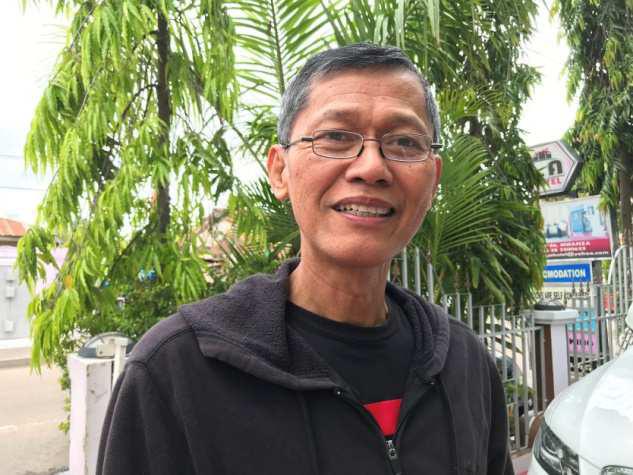
"Please allow me to introduce our three pioneer missionaries to Tanzania. I was humbled by seeing their enthusiasm, energy and commitment to the people they serve."