Bolivia – a Fascinating Country, Wonderful People
ARCHIVAL CHRONICLE
Simon Bolivar's Legacy & "Non-Existent" Mountains
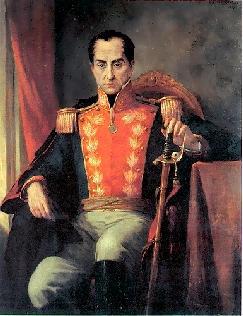
Everything about this land-locked country in the heart of South America is out of the ordinary. Bolivia is named in honor of Simon Bolivar (1783-1830), an independence fighter.
“Bolivia Does Not Exist”
Just over a century ago, a diplomatic crisis was brewing in La Paz over a glass of chica, a native drink. The new British ambassador to Bolivia had made the mistake of staring at this local drink when served by the incumbent dictator. As a punishment, hewas forced to drink a barrelful of chocolate and be led through the streets of the capital strapped to a donkey. When news reached London, Queen Victoria was not amused. She demanded a map of South America, drew an “x” though the country and declared, “Bolivia does not exist.”
Bolivia remains one of the least known of all South American countries. It is a place of natural heights and boasts the world’s highest capital city and the highest commercial airport. The country is often referred to as the Nepal of South America. I was very impressed with its majestic mountain scenery.

STREET INTERFACES, ETIQUETTES & STAPLE FOODS
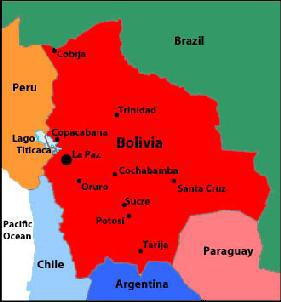
Bolivia is one of thirteen South American countries and has a population of 10 million people. It is bounded by Chile and Peru to the west, Brazil to the north and east and Argentina and Paraguay to the south. Its population can be roughly divided into three distinct ethnic groupings: about 60% are indigenous; about one third is people of mixed European and Indian ancestry and the rest are of European origin.
Bolivians are polite and courteous. A smile, a greeting and a few friendly words in Spanish will go a long way to endearing you to the local people and generally making your trip and stay easier and more enjoyable. Men should always remove their hats and say “con permiso” when entering offices and be prepared to shake hands. Greeting others, people always say “Buenos dias” (until midday) and then “buenas tardes.”
“Getting Around”
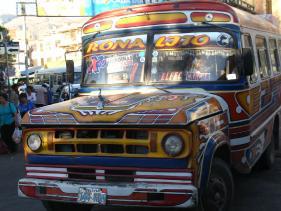
Bolivia is generally a safe country. However crime is not unknown to the country. Travelers must take some precautions in markets and bus terminals. Many parts of Bolivia are remote. The problem is the country’s road system. Only 40% of the nation’s roads are paved. The rich fly, a tiny minority own cars and the rest of Bolivia jostles at mega bus terminals. Going by bus in Bolivia may be the cheapest way to get around but it is also dirty, uncomfortable and at times scary.
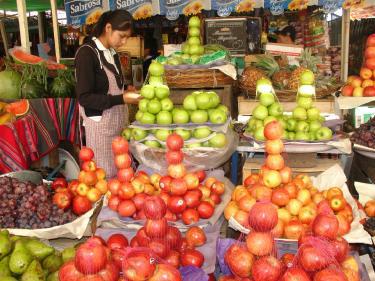
The staple foods produced in the tropics are yucca, rice, corn, bananas, tropical fruits, soy and beans. Consequently, dishes tend to feature these heavily. Fruits of numerous kind are plenty and excellent and they are quite cheap and available.
TOTAL POPULATION
10M
South American Heart
INDIGENOUS RATIO
60%
Strong native baseline
ROADS PAVED
40%
Mega bus congestion
RURAL POVERTY
97%
Income below limit
Parties and Fiestas
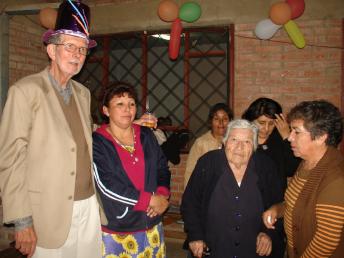
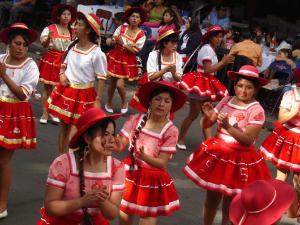
Bolivians love parties and fiestas are a fundamental part of their lives. One of the most striking features of Bolivian fiestas is the fantastic variety of masks worn by the dancers. Each one depicts a character from popular myth. It is only when they wear costumes and masks and eat and drink and dance to excess that the indigenous people of Bolivia show their true character, which explains why attending a fiesta is such an essential part of getting to know this strange and fascinating country. Invariably fiestas involve drinking and non-stop dancing, the most popular form of entertainment. The music of Bolivia has been described as the very heartbeat of the country.
Religions are many
Bolivia’s constitution mandates religious freedom. Besides Catholics, there are other denominations who are a minority, Evangelicals, Mormons, Jehovah’s Witnesses, Seventh Day Adventists, and various Pentecostal denominations. A very small portion of the population participates in Church activities. The Socialist administration of Bolivian President Evo Morales (a Catholic with an indigenous background) has not always had a good relationship with the hierarchy of the Roman Catholic Church. Catholic bishops are still able to inspire and draw support from the Catholics.
In rural areas indigenous rituals are often mixed with Catholic belief. When a Bolivian is ill, he or she is more likely to visit the local curandero or healer, than arrange an appointment with a doctor. Bolivians are nothing if not superstitious. People buy miniature cars and trucks and have them blessed by a priest so that the real thing can be theirs within that year. They also are seen buying models of houses, suitcases, banknotes, college diplomas, which they feel might require a little divine intervention.
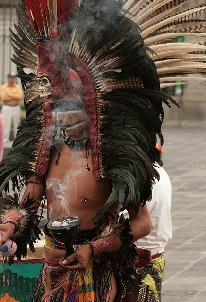
Though ostensibly a Roman Catholic country, much of its ancient culture and tradition remains intact. Although 97% of the population belong to the Roman Catholic Church, in reality religious life for the majority of Bolivians is a mixture of Catholic beliefs brought from Europe and indigenous traditions based on animism, the worship of deities such as mountains, animals and plants. Pachamama, or Mother Earth occupies a very privileged place in indigenous culture because she is the generative source of life.
Journal of the Bolivia Journey
A 30-day journey of Spanish language immersion in Cochabamba, visiting sisters, remote chapels, and mountain development efforts.
Products and Poverty
Bolivia is divided into nine departments (States) administered by elected governors. They are further divided into provinces and municipalities. Agriculture is an important sector of the economy, employing over a third of the population. They grow soybeans and other crops like cotton, sunflower and sugar. Mining also contributes to the economy. Bolivia is a major producer of tin, wolfram, silver, lead, zinc and gold. The oil and gas industry traditionally provides the government with its largest single source of income.
As well as being culturally diverse, Bolivia is also a very poor country, the second poorest in South America. Economic necessity has led to the growth in the number of working women and children, Bolivia has the highest percentage of rural poverty inthe world. 97% of the rural population has an income below the poverty line. But the urbanization is increasingrapidly. Rural Bolivia has a huge disadvantage in terms of education, healthcare, employment opportunity and government services.
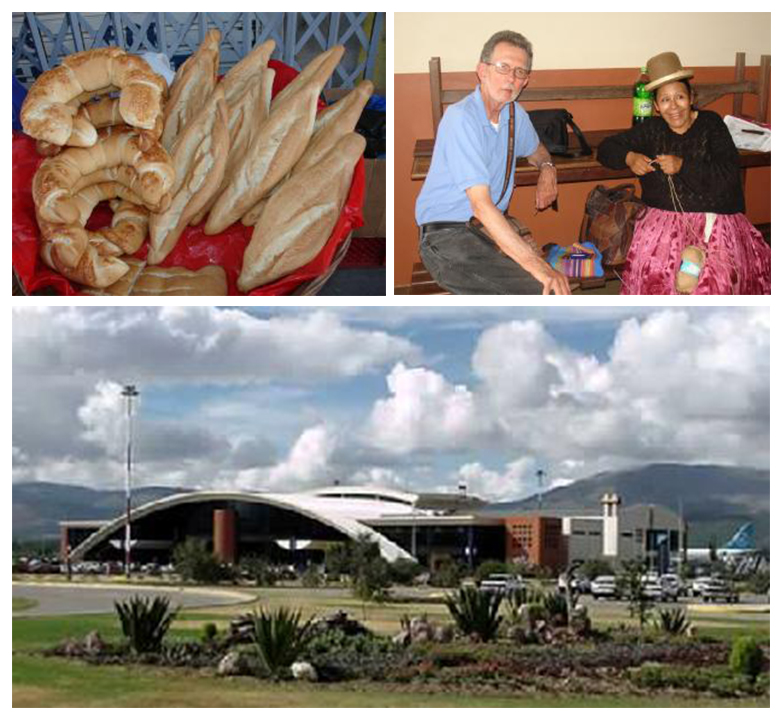
La Paz is the capital city. The airport in La Paz is 2.5 miles above sea level. Because of its height, the incomingflights have to ascend to land. The sight of the city lying 1,650 feet at the bottom of a deep canyon literally takes your breath away. For most people, breathing at this altitude can be a problem. Visitors have to take precautions against altitude sickness.
Cochabamba and Our La Salette Ministry
Exploring the city of Cochabamba is an adventure in itself. Cochabamba is 7 hours east of La Paz by bus and ten hours further east of it is the relatively prosperous city of Santa Cruz. This city deserves its unofficial title of “City of Eternal Spring”. Set in a bowl of rolling hills, its inhabitants enjoy a wonderful warm, dry and sunny climate. There are many churches and streets lined with old colonial houses. Though there are lots of modern structures, Cochabamba has not lost its colonial character. Jorge Wilstermann airport in Cochabamba is small. The name, Cochabamba, is derived from joining the Quechua word “Cocha” and “pampa” which together mean swampy plain.
Economically, this region is of vital importance to Bolivia. Cochabamba came to be known as the breadbasket of Bolivia because of its high volume of maize and wheat production. Not only is Cochabamba the agricultural heart of the country, but it also produces the raw material for Bolivia’s fastest growing export earner, cocaine.
This is also where you find the country’s best chica, the fermented corn beer. Here also are crumbling old colonial villages, ancient ruins, beautiful national parks and some of Bolivia’s best markets and festivals. La Cancha is a huge market and a well worth a visit on Wednesdays and Saturdays when it is packed with Campesinos (people from the villages). It is also a very good source for tourist items and souvenirs. Here you can see indigenous women in traditional bowler hats and brightly colored voluminous skirts selling you absolutely everything you could possibly need. The market sells everything under the sun but is not safe late at night. Also watch out for pickpockets during the day. It is quite cheap to eat at restaurants. You can have a sumptuous meal for less than $5.
Native Beliefs Attached to Catholic Feasts
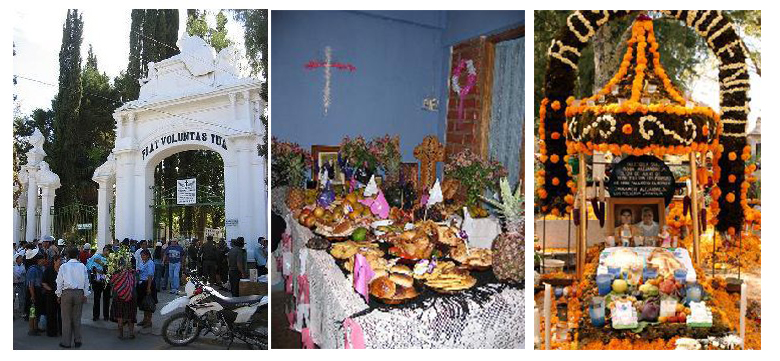
One of the most important dates in the indigenous people’s calendar is the second of November, the Day of the Dead. This is just one example of religious adaptation in which the ancient beliefs of ethnic cultures are mixed with the rites of the Catholic Church. According to their belief, the Spirit visits its relatives at this time of the year and it is fed in order to continue its journey before its incarnation. The relatives of the dead prepare for the arrival of the spirit days in advance. Among the many items necessary for these meticulous preparations are little bread dolls. A ladder is needed for the spirit to descend from the other world.
There are other figures which represent the grandparents, great grandparents, and loved ones of the person who has passed in to a better life. Inside the home, the relatives construct a tomb supported by boxes over which is laid a black cloth. Here they put the bread, along with sweets, flowers, onions and sugarcane. Sugarcane symbolizes the invigorating element which prevents the spirit from becoming tired on its journey towards the earth. The union of the flowers with the onion ensures that the deadone does not become disoriented and arrives in the correct house.
The tomb is also adorned with the dead relative’s favorite food and drink, not forgettingthe all-important glass of beer. This is the first nourishment taken by the souls when theyarrive at their houses. Once the spirit has arrived and feasted with the living relatives, theentire ceremony is then transported to the graveside in the local cemetery where it is carried out again together with many other mourning families. This ceremony or the meeting of the living and their dead relatives is re-enacted the following year and again for the final time in the third year, the year of the farewell.
Mate, More Than a Drink...
On the 2nd of November, I flew out of St. Louis through Chicago to Miami to catch a flight to Bolivia thus making my first mission journey to South America. The flight took off at 11pm and arrived in La Paz early in the morning. Upon arrival at the airport in Santa Cruz an hour later, I was met by Fr. Tito Vargas from the Holy Family Fathers who introduced himself to me as my cousin since a La Salette founded this community. Fr. John Higgins, M.S., had made prior arrangements with them for me to stay at their place for a day because my next flight to Cochabamba was scheduled for the evening.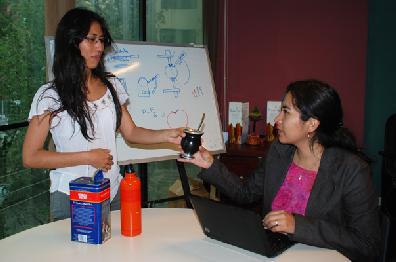
As soon as we arrived at their home, they took me on a tour to show me their parish church and their two community houses. While waiting for the lunch to be ready, we sat with rest of the Holy Family community to drink mate. It is a strong community experience. Mate is the national drink of Argentina. It is also popular in Paraguay, Uruguay, Bolivia and Southern Brazil. It consists of green dried leaves of a particular herb. You also need a hollow gourd the most popular form of entertainment d, a metal straw and hot water. The gourd is filled two thirds of the way with the moist mate herb. Hot water is poured in to the gourd. Then the person sucks the mate water out of the gourd with the straw and once the water is fully sucked, the gourd is refilled with hot water and passed to the next person in the group. When that person finishes, the gourd is handed back to the server for another refill.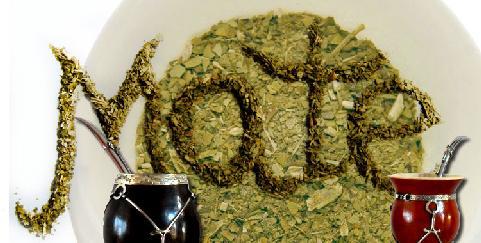
This rotating process of sharing is what makes the act of drinking a moment of intimacy for those present. I must have had mate in more than 20 places during my trip. You see students and teachers drinking mate in schools and colleges, priests and brothers in the rectories, people at the parks, and priests and brothers when they gather for retreats and assemblies except at Mass. In villages, people would sit together, tell stories, thus sharing and strengthening life while taking mate.
I bought everything including the special cup that would make a good mate. Fr. Tito brought me back to the airport to fly out to Cochabamba in the evening. Words are not enough to express my gratitude to the Holy Family Fathers for their wonderful hospitality. Muchas Gracias a Padres Tito, Paulo, Leo y Louis!
Frs. John Higgins and David (Cardoso?) were waiting for me at the airport in Cochabamba to welcome me. We stopped by a pizza house to have some dinner and finally arrived at the rectory which was to be my home for the next 30 days. Why did I choose to come to Cochabamba? First of all, this is the only place the La Salettes are present in Bolivia. The two homes that once housed the novices are only a mile away from our parish and rectory. They are now rented to Maryknoll lay missioners from the United States.
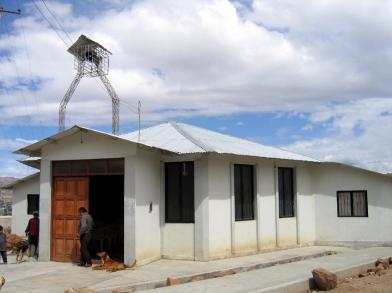
Our La Salette Parish in Cochabamba
Living with the La Salette Community was such a pleasant experience. There is only one parish and three members of the community live together at the rectory. Like anywhere else, vocation to religious life and priesthood is scarce and so everyone is concerned about the future of La Salette in Bolivia. Fr. David (Cardoso??) is the pastor. He does an excellent job and he is a very humble, capable, gifted and friendly.
He focuses his ministry on the youth especially with those interested with La Salette. There are seven possible candidates he regularly meets with. They are potential future La Salette missionaries someday in the future. I was asked to meet with them while I was there and after the meeting we had dinner together. I asked them to introduce themselves and I would like to present them to you so that we can all pray for these potential candidates for La Salette.
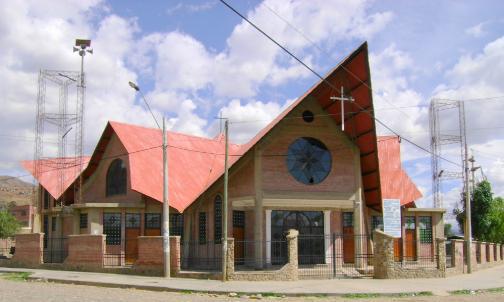
Blessings Galore at Our Chapels
The parish has two active mission chapels around the area, the Church of the Exaltation and Christ Reconciler. Since David was away for almost two weeks visiting the novices in Brazil, I was privileged to celebrate Mass in those chapels and at the main church, which is known as “Neustra Senora de La Salettte.”
What impressed me most was a beautiful practice after Mass. Every person in Church would come up front to have their heads and hands sprinkled with holy water. It is only then that they feel fully blessed and ready to go home.
There are also other missions farther away and up on the mountains where there is no regular activity taking place except on special occasions.
My Spanish Immersion Experience
Besides visiting our mission, I had the strongest desire to learn more Spanish through total immersion. A day after my arrival in Cochabamba I was introduced to Carmen Vega, who gave up her profession as a teacher and now runs a private school for language studies together with her husband, Jacques. She is known to the La Salettes because many novices from Brazil as well as Fr. Jack Nuelle, M.S., once were her students. Carmen and Jacques operate out of their home and you quickly feel at home with them.
I took a public bus to get to school every day except when Fr. John Higgins gave me a ride. There were students from Sweden, France, Germany and Canada. Monday through Friday I had class for four hours with lots of homework. There were four teachers and every student had their own teacher. I almost didn’t speak English for a month.
There were extra-curricular activities, especially during the weekends, like visiting museums and open markets, walking five miles around Lake Laguna Alalay, climbing the mountains, playing cards, eating out and exploring the city and culture. Carmen Vega Language School is excellent and I highly recommend it to anyone whether a beginner or someone wants to advance in their language skills.
Feeding the Hungry: Comedor & Urkupinia Soup Kitchens
Next to the rectory is a building that serves as “Comedor” or soup kitchen. It is a great ministry helping families who are extremely poor. There is a second one started by Jim Weeks in response to a request from a poor school in the neighborhood, situated on the mountain in a barrio called Urkupinia. There are others operated by different churches in the area. Sr. Zelinda from the sister of St. Joseph, a Brazilean community coordinates all the dining halls.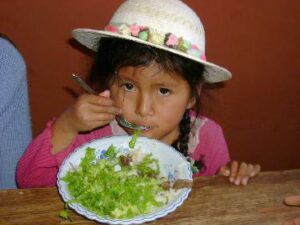
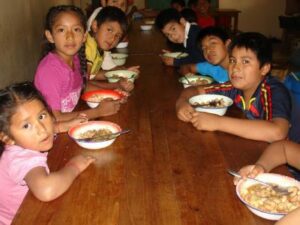
There are anywhere from 200 to 230 kids each in every comedor that benefit from this ministry every year. The philosophy behind it is that not everything is free. Parents, neighborhood associations and others are expected to coordinate well. The parents or family members have to help out in the kitchen. The parents are charged one Boliviano (15 cents) per day per child. Those who can pay, they pay but those who cannot are taken care of. There is no compensation for coordinators or volunteers. The parents also have to do other works like cleaning the church and surroundings. Noon meal is provided from Monday through Friday for 10 months.
The coordinator brings in speakers to talk to the children and parents on topics like hygene, addictions to alcohol and drugs, unity in the family as part of their formation.
Finances are not always adequate although help comes from La Salette and another foundation. Budget has become very tight in some years. The government puts strict demands on the Church. They have the right and obligation to see that the kids are well-treated. The Church is expected to certain standards in keeping the building in good shape, address on sanitation concerns and keeping kitchen clean. Fr. David is so concerned about the lack of toilets. There are only 2 toilets for 300 persons. Fr. John Higgins worries more about the Comedor in Urkupinia that has no toilets. They are in need of building couple of toilets that would cost around $7500 and need to buy a water tank which will cost about $1000. There is a need for replacing refrigerators, stoves etc. Anyone want to help?
Knitting and Painting in Aguada Village
One day Fr. John Higgins drove me to two mountain villages called Aguada and Urkupinia where they have a project for knitting and painting for women that has been going for many years. He invited me to visit the women during one of their sessions.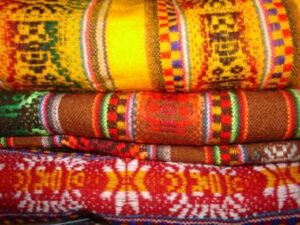
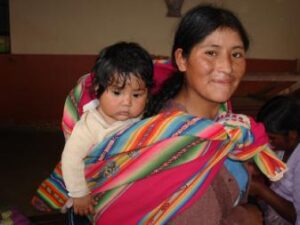
I was curious about the way they were dressed. I saw some carrying their babies in aguayo. Aguayo is a multicolored woolen cloth made in a rectangular shape used in traditional communities of Ecuador, Peru, Bolivia, Chile and Argentina. The women use the aguayo to carry their babies close to their bodies. They also use them to carry groceries and to sit on.
About 15 to 20 women meet once or twice a week. Not all women are Catholics. There are evangelicals and others. Fr. John said “We welcome everyone, thus becoming a wonderful presence of the Church to them.” It is more than making money but meeting people and witnessing to the truth that we are all one human family and that we are all brothers and sisters and that we are one Church and we have one God.
Children come with their mothers. One of the Lay Missionaries from the USA started this project for women who are simply house wives. Now they make sweaters, hats, mufflers etc. There is one lady who teaches knitting and another who teaches painting. They spend about $500 each a year to buy the materials. Although it is not a big money making project at the moment, they hope that this will turn to be a source of income for the families that participate.
The South American Church: On the Side of the Poor and the Oppressed
I asked Fr. John about the role of the Church in Bolivia? He told me that it is the most credible institution in the country. The Church is on the side of the oppressed in general. There are many religious women and men that have given their lives. He pointed out Fr. Louis Espinal, a perfect example of a martyr, a Jesuit priest from Spain, who was killed by the military.
The Church has many social services in defense of children. The question is how to live together with a socialist government, which denounces the Church as a privileged institution.
“Let the Children Come to Me.”
A deep dive into the Mustard Seed Child Care Center (Guarderia) and Father John's joyful service.
Mustard Seed is the name of a Child Care Center, which is also known as Guarderia in Spanish. It is a multifaceted program in conjunction with a German Foundation by the name of “Aldeas Infentiles Sos.” The foundation opened up child care centers in marginalized neighborhoods, where families are at risk due to poverty and violence.
It is a program for fifty weeks of the year from Monday through Friday where the children from ages 1 to 6 receive breakfast, lunch and snacks, and are educated in a Montessori method. There are many parties involved in this project:
THE GOVERNMENT
Pays no salary for the educators, but provides a stipend with no benefits.
THE PARENTS COMMITTEE
Elects the educators who are not professionals but committed parents of the children.
THE SOS FOUNDATION
Provides structural formation of the educators, awarding them certificates in child care.
They also organize retreats for the families, and workshops for single mothers and fathers. They set plans and goals, holding workshops on community, family, finances and management of funds, relationships, children, violence, and respect for women. They also pay part of their food. Thus Sos supervises and provides facilitators.
Psychological attention is made available for children and families and also some medical services are made available to them. The parents pay a monthly fee of about $6 a month. They also participate in fundraising activities.
La Salette Community & Global Support
The La Salettes provide the facility, the building, and the maintenance. The La Salette Community through the Mission Office has donated $15,000 towards this project. Fr. John Higgins, with the help from his family and friends, was able to raise the rest to build the facility.
"The building has room for expansion, which could double the children. Right now, there are 46 children and six educators. I felt so grateful and happy to know that you and I contributed to building the future of these children."
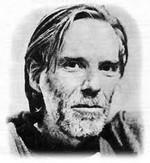
Fr. Luis Espinal, S.J. (1932-1980), Priest and Martyr
Today marks the twenty-fifth anniversary of the murder of Fr. Luis Espinal, S.J., in La Paz. Coincidentally, Fr. Espinal was killed only three days before another high-profile murder of an outspoken priest that criticized an oppressive government, Archbishop Oscar Romero in El Salvador.
Born in Spain, Fr. Espinal came to Bolivia in 1968 and immediately took on the role of an outspoken critic of the military dictatorship and defender of the poor. Three years after arriving to Bolivia, Espinal became a naturalized Bolivian and became actively involved in hosting a radio program at Radio Fides and publishing a newspaper called Aqui.
A well-known film enthusiast and critic, Espinal hosted a radio program with his friend Eduardo Perez (better known as Padre Perez, who still hosts a TV program and radio program in Bolivia). When Espinal, who never missed a Saturday morning radio show, did not show up on March 22, something seemed fundamentally wrong. It was soon discovered that he had not returned to his room the night before. La Razon describes his final days:
"On the night of March 21, 1980, the film enthusiast Espinal was returning to his house after watching a movie in the 6 de Agosto theater. At the end of the street Diaz Romero in Miraflores, near where he shared a house with fellow Jesuits, a young man witnessed a man being forced into a jeep and, then he heard a cry for help. Luis Arce Gomez and Guido Benavidez, as was discovered later, were the responsible for the kidnapping and murder."
The priest was taken to the Achachicala slaughterhouse where he was tortured for four hours, before receiving 17 bullets. In the early dawn hours, a campesino found his body in some trash near the road to Chacaltaya, where the neighborhood Plan Autopista now is located.
The burial was attended by approximately 80,000 weeping persons. In his tomb in the General Cemetery, where fresh flowers are always placed, it reads: “Killed for helping the people.”
Fr. Espinal is remembered all across Bolivia, and especially in La Paz where a pilgrimage is annually held to the spot where his body was found. The Spanish-Bolivian priest never thought his life was in danger and did very little in terms of precautions.
FR. ESPINAL'S ONCE WROTE:
“No queremos mártires… El país no necesita mártires, sino constructores...”
“We don’t want martyrs… The country does not need martyrs, instead it needs builders…”
— Written in "Aqui" Newspaper